
Alaska Probate Court Records
Alaska probate court records are the official files created when an estate moves through the court process after someone dies. Each file holds the documents from the first petition through the final transfer of assets. The Alaska Court System handles these cases through Superior Courts in each of the state's four judicial districts. You can search many probate records online through CourtView, the statewide public access system, or you can submit a written request to the court where the case was filed. This guide explains what Alaska probate court records contain, which courts maintain them, and how to get copies.
Alaska Probate Court Records Overview
What Alaska Probate Court Records Contain
Probate records in Alaska document how the courts handle an estate when someone dies. The Superior Court clerk in the judicial district where the case was filed keeps these records. Both formal and informal probate cases produce public court documents. Each step in the process adds a filing to the record, building a full picture of how assets were handled and distributed.
A typical Alaska probate file may include the original will if one was left, the petition to open the estate, the court order appointing the Personal Representative, a complete inventory of property, notices sent to creditors, any claims filed against the estate, receipts confirming that heirs received their distributions, the final accounting showing all funds in and out, and the order closing the estate. Guardianship and conservatorship cases generate similar files and are kept in the same court system. These records go back many decades in some courthouses.
Most probate records in Alaska are public. You do not need to be related to the deceased to ask for copies. Some records have restricted access. Adoption case files that appear alongside probate matters are confidential under Alaska Statute 40.25.120(a)(1). Sealed cases and matters involving minors also carry limited access. When in doubt about whether a specific record is open, ask the court clerk before submitting a formal request.
The Alaska Court System is the central resource for locating and requesting probate files across the state. The system introduced AVA, an AI chatbot specifically built to answer questions about probate estates.
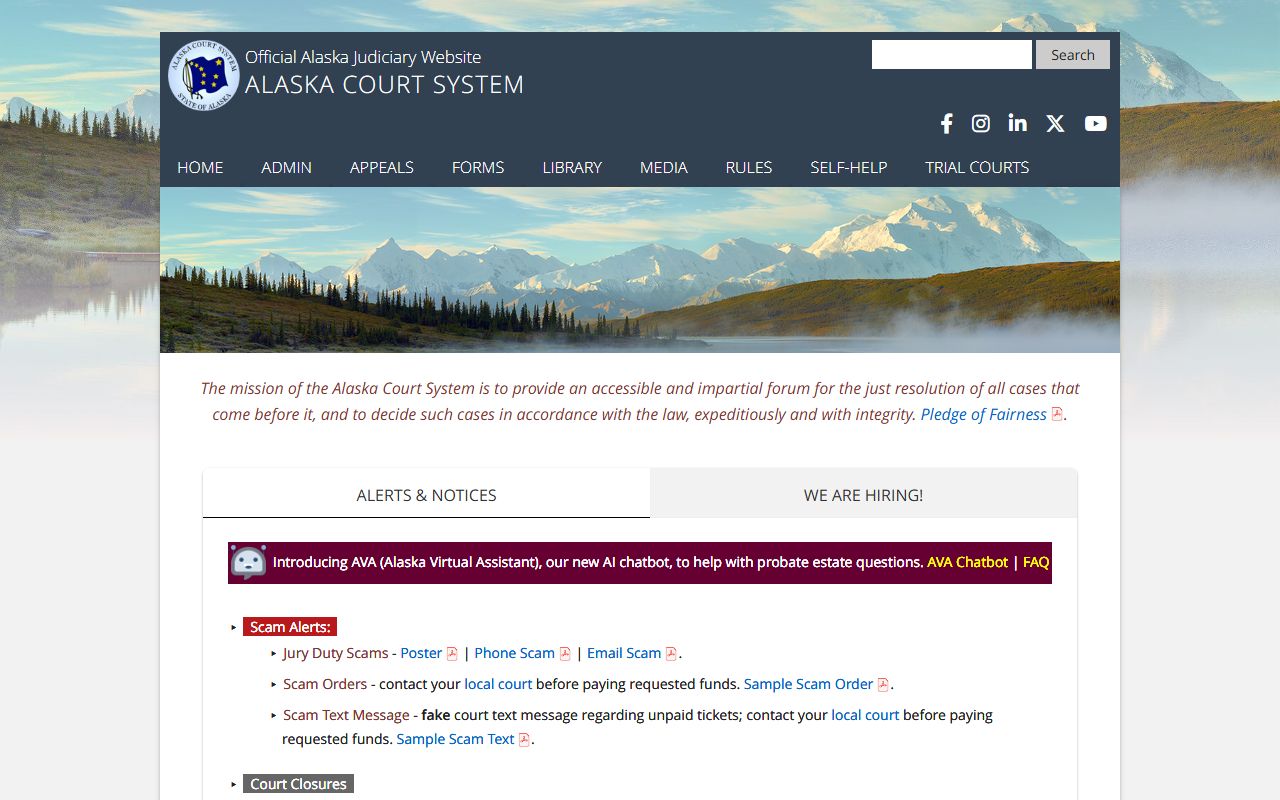
The main court website connects users to CourtView, court locations and hours, self-help probate guides, and all official forms needed for estate proceedings.
How to Search Alaska Probate Court Records Online
The Alaska Court System case search portal is where most online probate record searches begin. It links directly to CourtView, the statewide name index for all trial court cases filed in Alaska. CourtView is free to use. It gives you access to case numbers, party names, general case types, and case status.
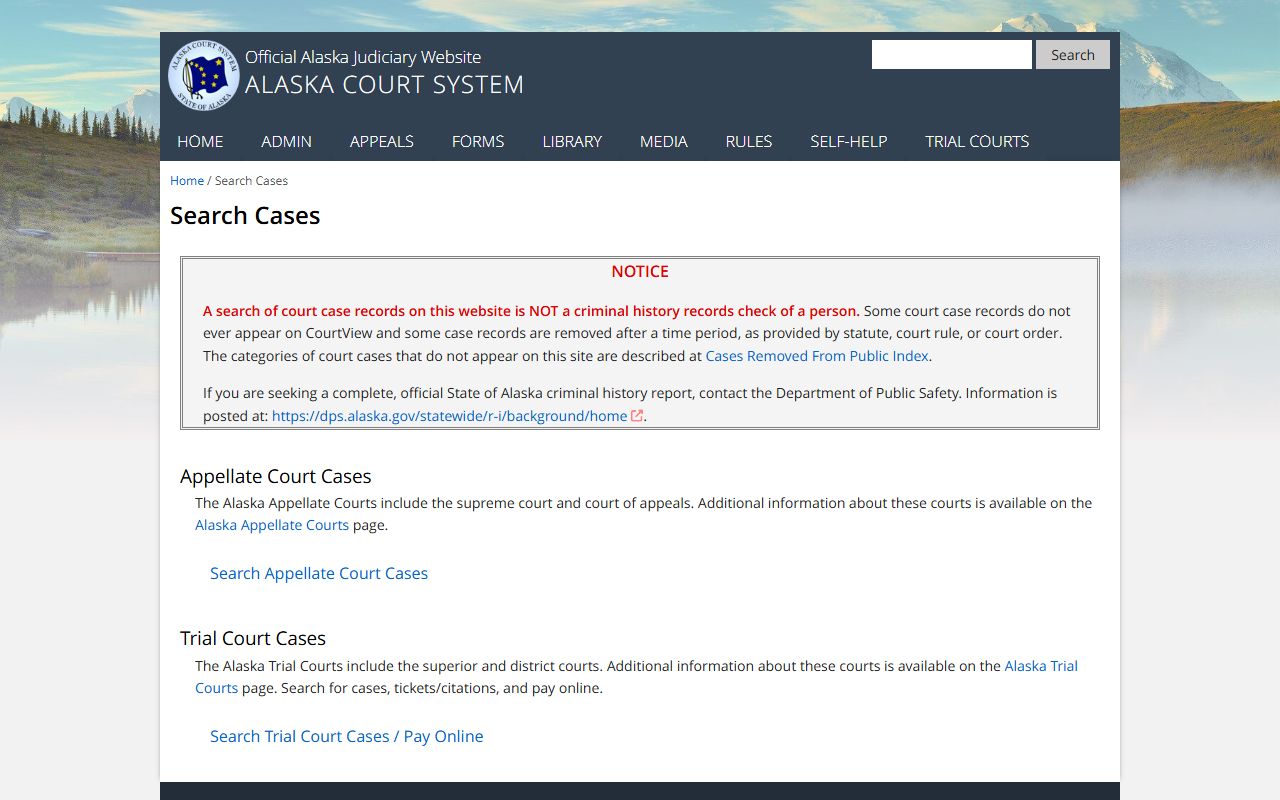
The case search portal is the starting point for finding probate filings by party name or case number at any Alaska court.
Probate cases in CourtView use the "PR" suffix. A case number like 3KN-98-01234PR identifies the Third Judicial District, the Kenai court, the year 1998, and the sequence number. Wills deposited with the court carry the "WI" suffix instead. The prefix tells you which court holds the file. "3AN" is Anchorage in the Third District. "4FA" is Fairbanks in the Fourth. "1JU" is Juneau in the First. Knowing these codes helps you quickly confirm you have the right case.
Not every case appears in CourtView. Certain records are removed from the public index under Administrative Rule 40(a). These include confidential cases, sealed records, adoptions, mental commitments, and some dismissed cases. Cases filed before 1990 may have limited or no information in the system. For those older records, contact the court clerk directly for assistance.
The CourtView information page explains how to read case numbers, what case type suffixes mean, which case types are searchable, and what CourtView does not include for probate matters.
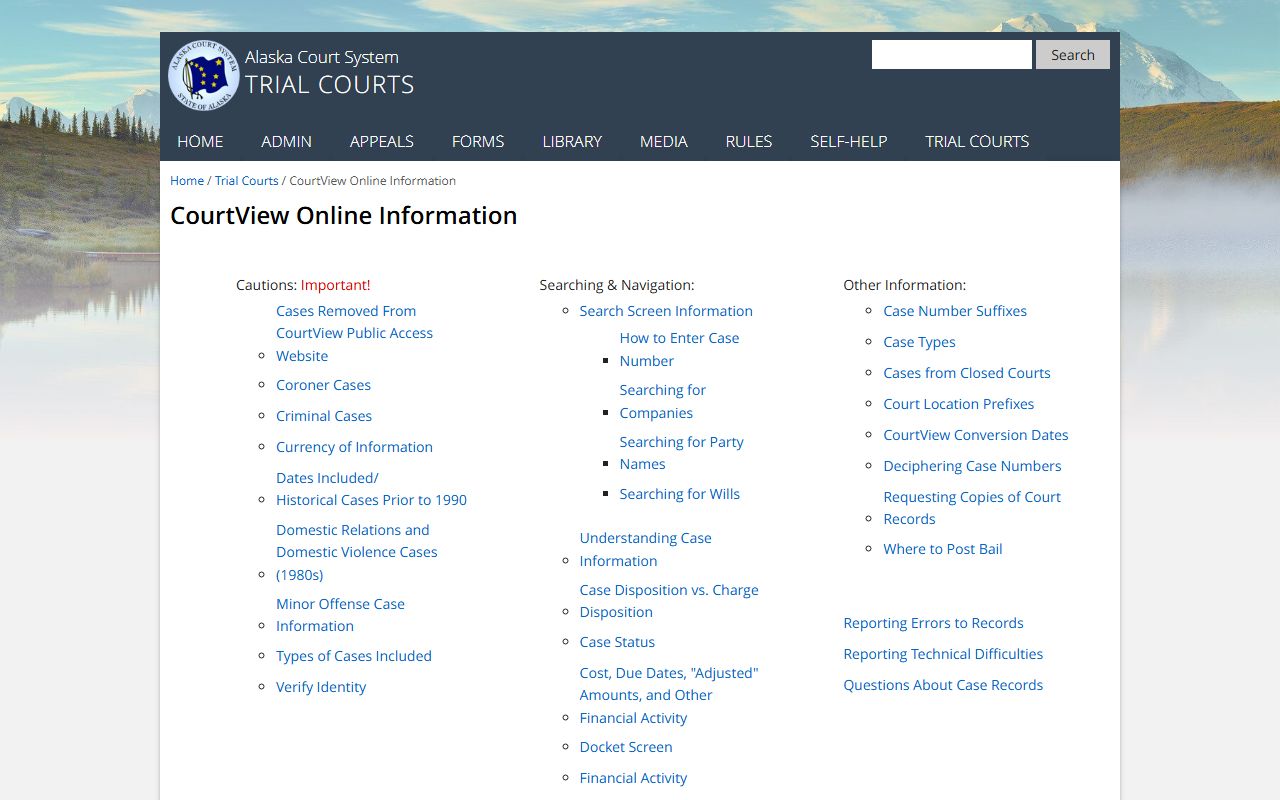
This page is worth reading before you search. It walks through the case number format and explains why some probate matters never appear in the public index.
Probate Court Records Across Alaska's Four Judicial Districts
Alaska runs one unified court system with Superior Courts that hold general jurisdiction over all civil matters, including probate. There are no separate probate courts. Every Superior Court in the state can accept and process estate filings. The court system divides the state into four judicial districts based on geography.
The First Judicial District covers Southeast Alaska, including Juneau, Ketchikan, and Sitka. The Second Judicial District serves northern and western Alaska from Nome. The Third Judicial District is the largest in caseload and handles south-central Alaska, including Anchorage, Palmer, Kenai, and Kodiak. The Fourth Judicial District covers interior Alaska from Fairbanks and extends to the Bethel region. Each district has a Superior Court that accepts probate filings, maintains case files, and handles records requests for cases filed in that area.
The full Alaska Court System directory lists every court location with physical address, mailing address, phone number, hours, and electronic filing contacts.
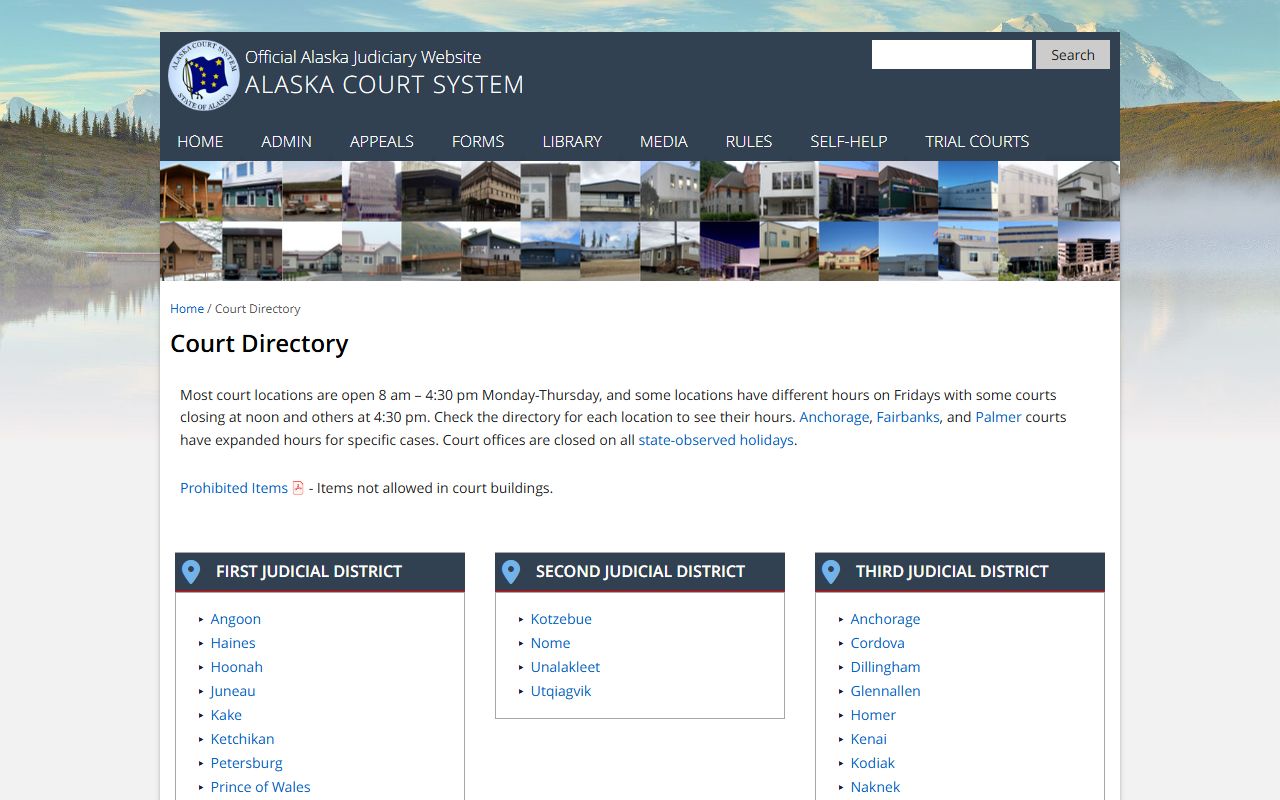
The directory covers all four judicial districts and provides specific email and fax contacts for filing probate documents and submitting records requests.
Informal Probate Records in Alaska
Informal probate is the most common type in Alaska. The Personal Representative handles most steps without returning to the court for approval at each stage. This is simpler and faster than formal probate. The case still generates a complete court record that is open to the public.
Under AS 13.16.080, an informal probate application must confirm that the applicant holds the original will if one exists, that they have priority to serve as Personal Representative, and that no objections are known. The filing fee is $250. Alaska residents must wait at least 5 days after the date of death before the court will sign Letters. Non-residents face a 30-day wait unless the will specifies Alaska law applies or the applicant was already appointed in another state. The process covers gathering assets, notifying creditors and heirs, paying debts, handling tax filings, and transferring legal title to the right people.
The Alaska Court System's informal probate guide walks through every step in plain language.
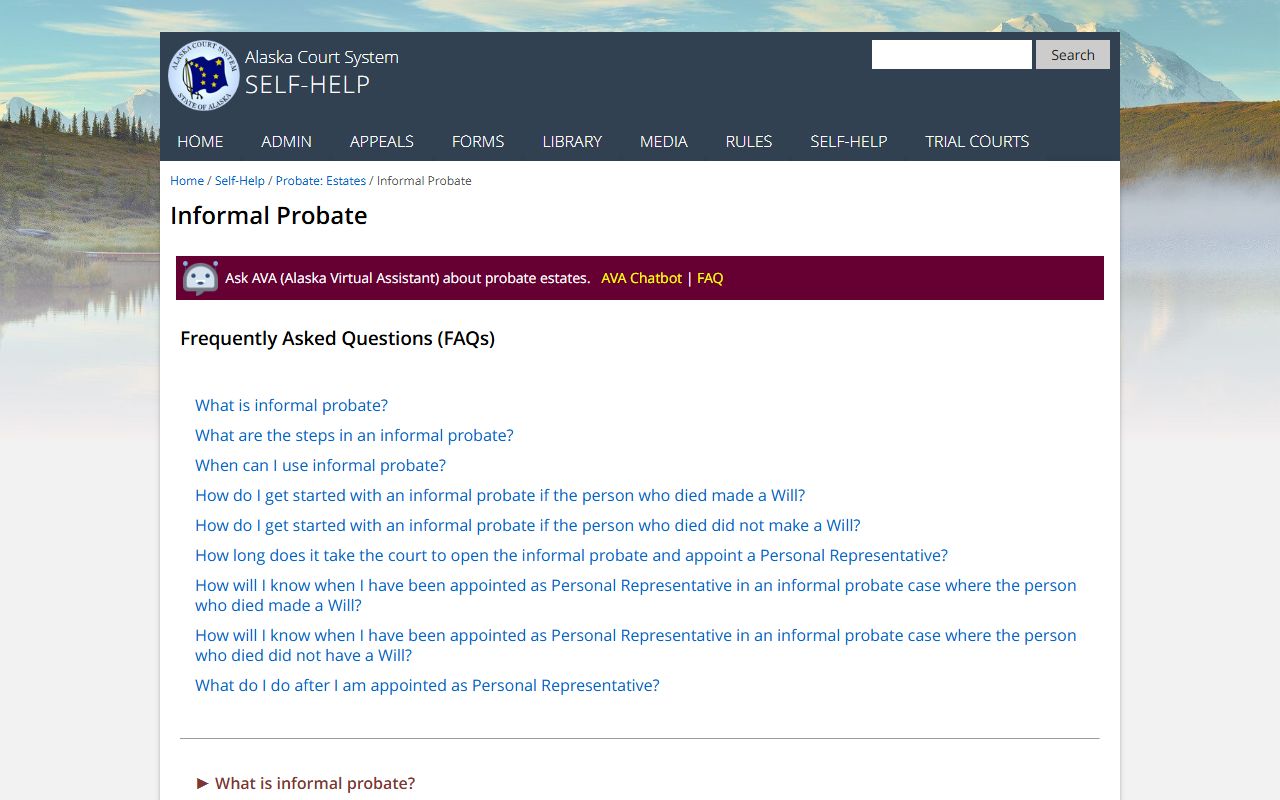
This page explains what informal probate involves, which steps require no court approval, and how the Personal Representative closes the estate when all tasks are done.
Formal Probate and Small Estate Proceedings
Formal probate applies when there are disputes about the will, disagreements over who should serve as Personal Representative, or other contested matters. Under AS 13.16.145, a formal petition must be filed, and the court typically schedules hearings. Each hearing, ruling, and motion becomes part of the public court file. Formal proceedings under AS 13.16.620 close with a court order rather than a sworn statement from the Personal Representative.
Small estates follow a different path. Under AS 13.16.695, the Personal Representative can close a small estate by filing a sworn statement. This avoids the need for formal court procedures. AS 13.16.630 also allows closing by sworn statement of the Personal Representative in certain situations, even for estates that started with a formal filing.
Alaska Probate Court Forms
All Alaska probate forms are free at courts.alaska.gov/shc/probate/forms.htm. They are organized by proceeding type: informal probate with a will, informal without a will, formal probate with and without a will, small estates, guardianship, conservatorship, and will deposits. Download, fill out, and file them at the Superior Court clerk's office in your judicial district.
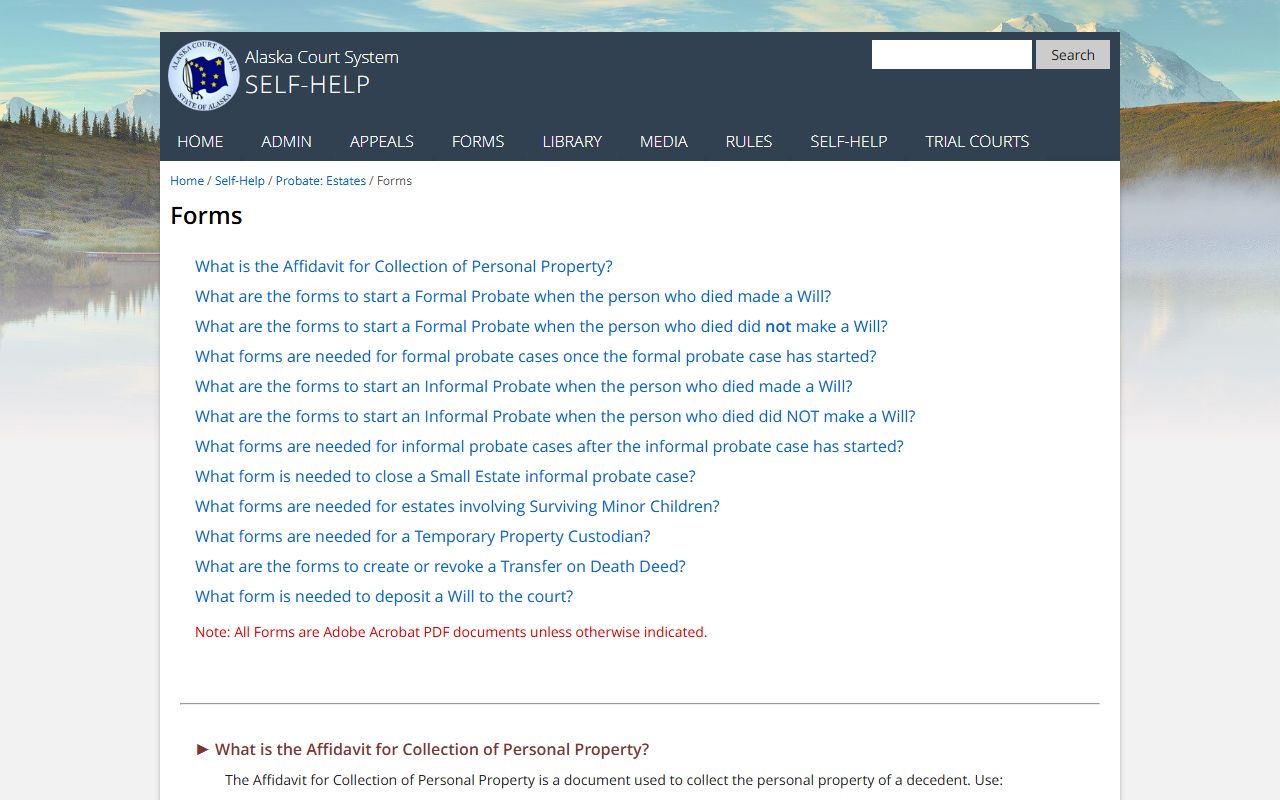
The forms page provides every document needed to open, manage, and close a probate estate in Alaska at no charge.
For informal probate with a will, the key form is P-315, the Request to Start Informal Probate and Appoint a Personal Representative. The court responds with P-316. For formal probate without a will, file form P-330 and the court issues P-331. Once the estate is open, you may need P-370 for the property inventory, P-341 for the Notice to Creditors, P-305 for the Demand Notice, and P-380 for the Final Accounting and Proposed Distribution. Small estate closings use P-350. The Transfer on Death Deed forms are P-150 to create and P-151 to revoke. For temporary property custodianship under AS 22.15.110(a)(3), use form P-130.
Guardianship forms for minor wards include PG-650 through PG-654. These apply when a will appoints a guardian for a surviving minor child.
Copy Fees and How to Request Alaska Probate Records
To get copies of Alaska probate records, submit a written request to the clerk at the court where the case was filed. The Alaska Trial Courts page has the correct form for each location. Anchorage uses TF-311 ANCH. Fairbanks uses TF-311 FBKS. Palmer uses TF-311 PA. All other courts use the standard TF-311. You can submit by mail, fax, email, or in person.
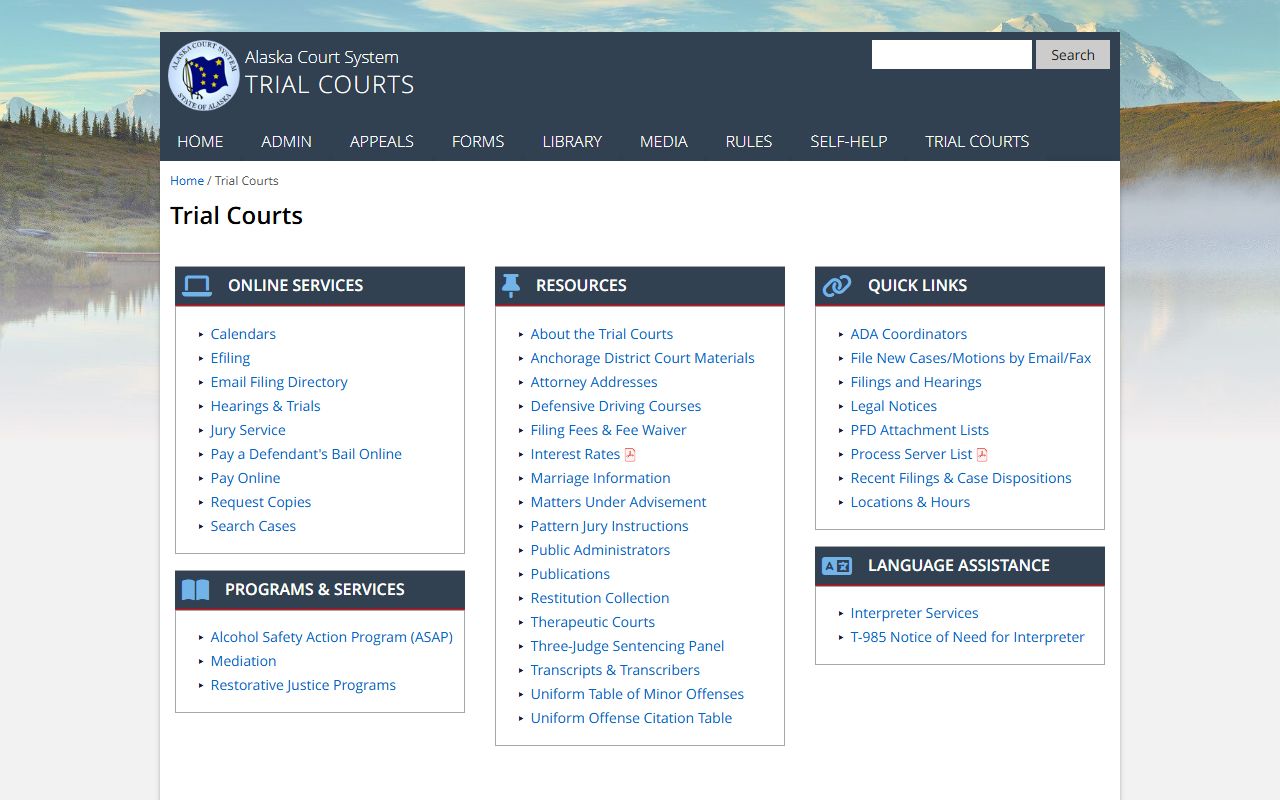
The trial courts page has download links for each location's records request form and contact information for submitting the request.
Statewide copy fees are set by the Alaska Court System. Plain copies cost $5.00 for the first document and $3.00 for each additional document requested at the same time. Certified copies run $10.00 for the first copy and $3.00 per additional certified copy. Exemplified or authenticated copies are $15.00 each. Research fees apply at $30.00 per hour when staff must search without a case number. Providing the case number in your request avoids this extra charge.
Processing times vary. Anchorage handles normal requests in 5 to 7 business days. Fairbanks online requests take 4 to 6 weeks, but in-person requests are processed the same day. Palmer online requests take 2 to 4 weeks. Valdez is currently at 4 to 6 weeks due to staffing. Visiting the courthouse in person is the fastest way to get records at most locations.
Note: Always include the case number in your request. Requests without a case number are billed at the $30 per hour research rate in addition to copy fees.
Historical Alaska Probate Records at the State Archives
The Alaska State Archives holds more than 17,000 probate case files and dockets covering 1884 to 1959. These were created by U.S. Commissioners of the Alaska District Courts before statehood. Cases may include estate inventories, wills, bonds, proofs of heirs, guardian accounts, burial expense claims, coroner's inquests, missing person inquiries, and testimony under oath.
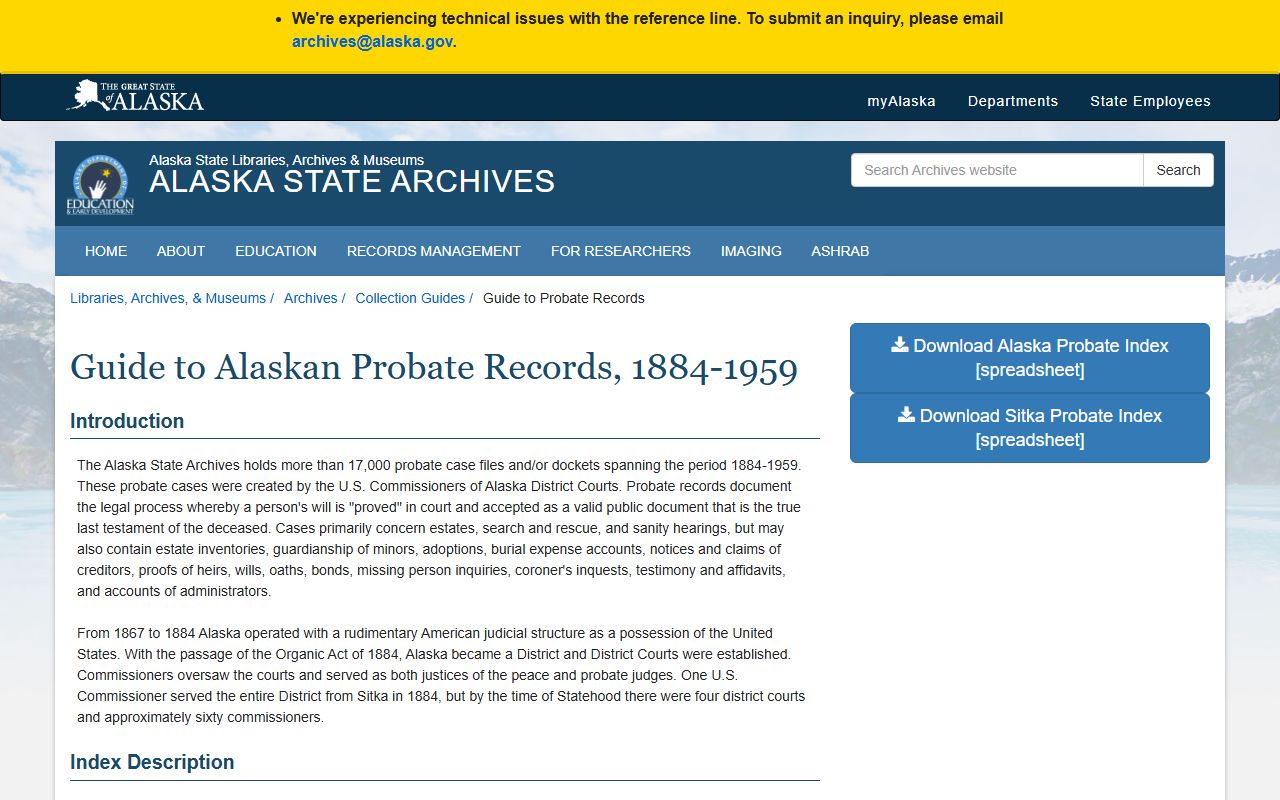
The Archives guide explains what types of records are in the collection, how they are organized by division and precinct, and how to request access to specific case files.
Two indexes help researchers find cases. The main index was built in the 1980s by Archives staff and covers most of the collection. It includes last name, first name, case number where known, precinct, type of case, and date. An online index covers approximately 17,000 cases from 1884 to 1960 and is arranged alphabetically. Pre-statehood records are open to the public with one exception: adoption case files that accompany probate records are confidential and require a notarized written request to the court deputy clerk to access.
First Division historical records include Ketchikan (1915 to 1968) and Sitka (1883 to 1959). Third Division records include Anchorage (1900 to 1974), Kenai (1901 to 1972), Kodiak (1901 to 1965), Valdez (1900 to 1960), and Cordova (1908 to 1960). Fourth Division records cover Fairbanks (1904 to 1976) and Kuskokwim Precinct in the Bethel area (1920 to 1958).
Guardianship and Conservatorship Records in Alaska
Guardianship and conservatorship cases are filed in the same Superior Courts that handle estate probate. These proceedings protect adults or minors who cannot manage their own affairs. The records are part of the court's probate and protective proceedings docket and are available through the court clerk in the relevant district.
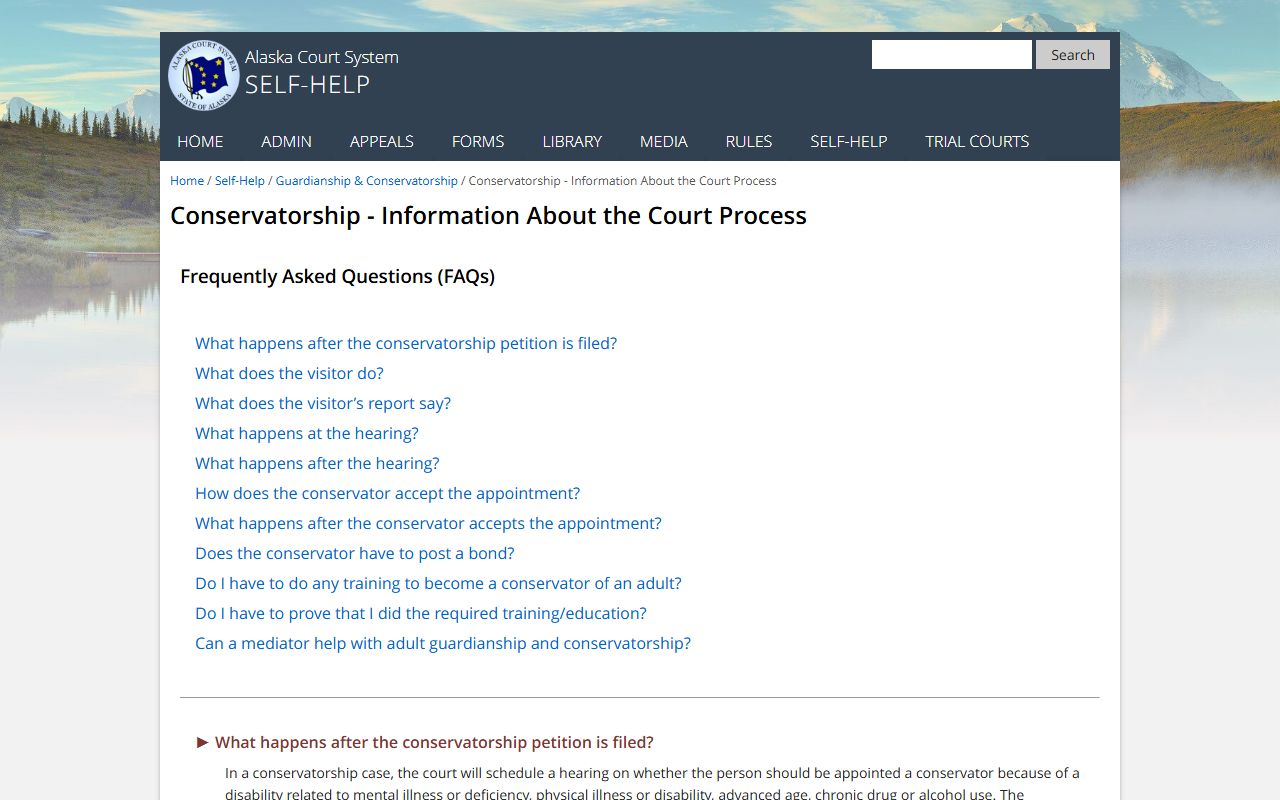
The Alaska Court System's conservatorship page explains the full process, including when a bond is required and what the conservator's ongoing duties are.
Alaska law requires all adult guardians to complete at least one hour of education before taking on their duties. This can be done through a video and reading materials available at local courts. The Office of Public Advocacy manages the Family Guardian Program and can be reached at (907) 269-3525 or Family.Guardian@alaska.gov. In Anchorage, classes meet the first Tuesday of each month at 4:00 p.m. at 900 W. 5th Ave., Suite 525. In Fairbanks, the required video plays every Monday and Wednesday at 3:00 p.m. in the Jury Assembly room at 101 Lacey Street. Contact the Fairbanks Probate Court Clerk at (907) 452-9256 with questions.
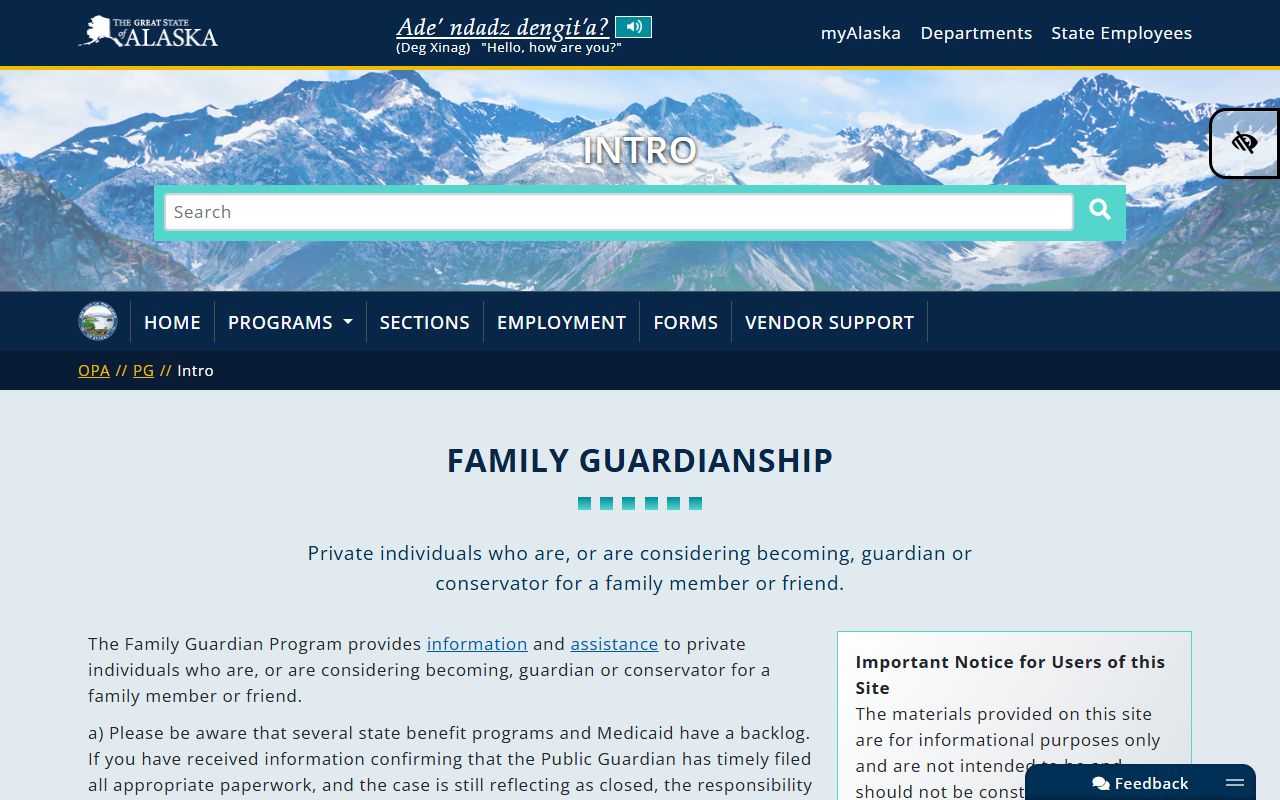
The OPA site details guardianship class schedules in Anchorage and Fairbanks and explains the ongoing obligations of court-appointed guardians and conservators.
Courts may require a conservator to post a bond when the estate holds significant assets. Under AS 13.26.020, a parent or guardian may also delegate certain powers related to caring for a minor or ward. All guardianship and conservatorship records are maintained in the court file and are available from the Superior Court clerk in the district where the case was opened.
Alaska Probate Statutes and Rules
Alaska probate law is grounded in the Alaska Uniform Probate Code, found in Title 13 of the Alaska Statutes. The Alaska Court System's probate laws page lists the key statutes with plain-language notes on what each one covers and how it applies to common situations.
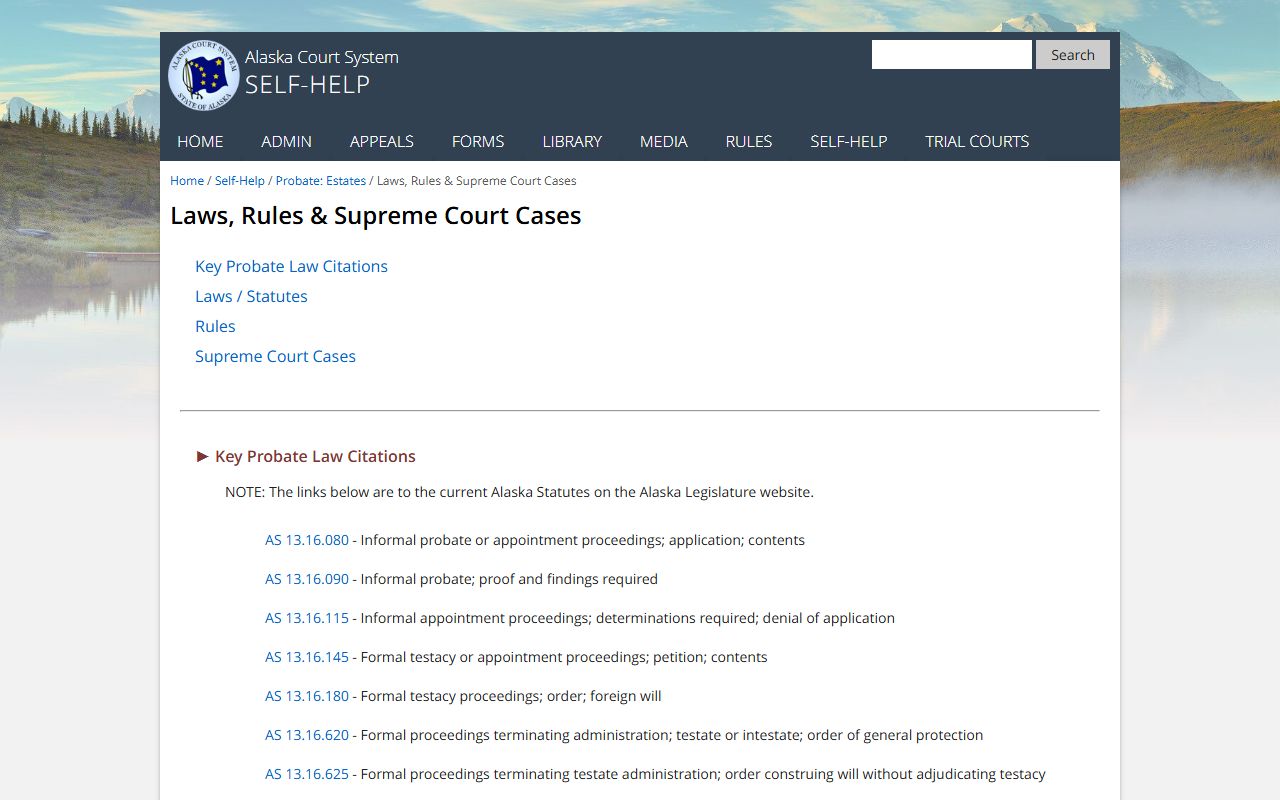
The laws page also links to Alaska Supreme Court opinions interpreting probate statutes and to the full text of the Alaska Rules of Probate Procedure, which govern how cases are handled in court.
AS 13.16.090 sets the findings required for the court to grant informal probate. AS 13.16.115 describes when the court may deny an application. AS 13.16.180 covers formal testacy orders and the treatment of foreign wills. AS 13.16.625 allows the court to construe a will without fully adjudicating testacy. The Uniform Transfers to Minors Act at AS 13.46.010 through .999 governs how property is transferred to minor beneficiaries, which comes up in many estate distributions. Rule 7.1 of the Alaska Rules of Probate Procedure sets out how the Personal Representative's fee is determined, based on factors like the complexity of the estate and the time required.
Alaska Probate Terms and Definitions
The Alaska Court System maintains a plain-language glossary of probate terms to help people understand what they find in court records, forms, and court orders.
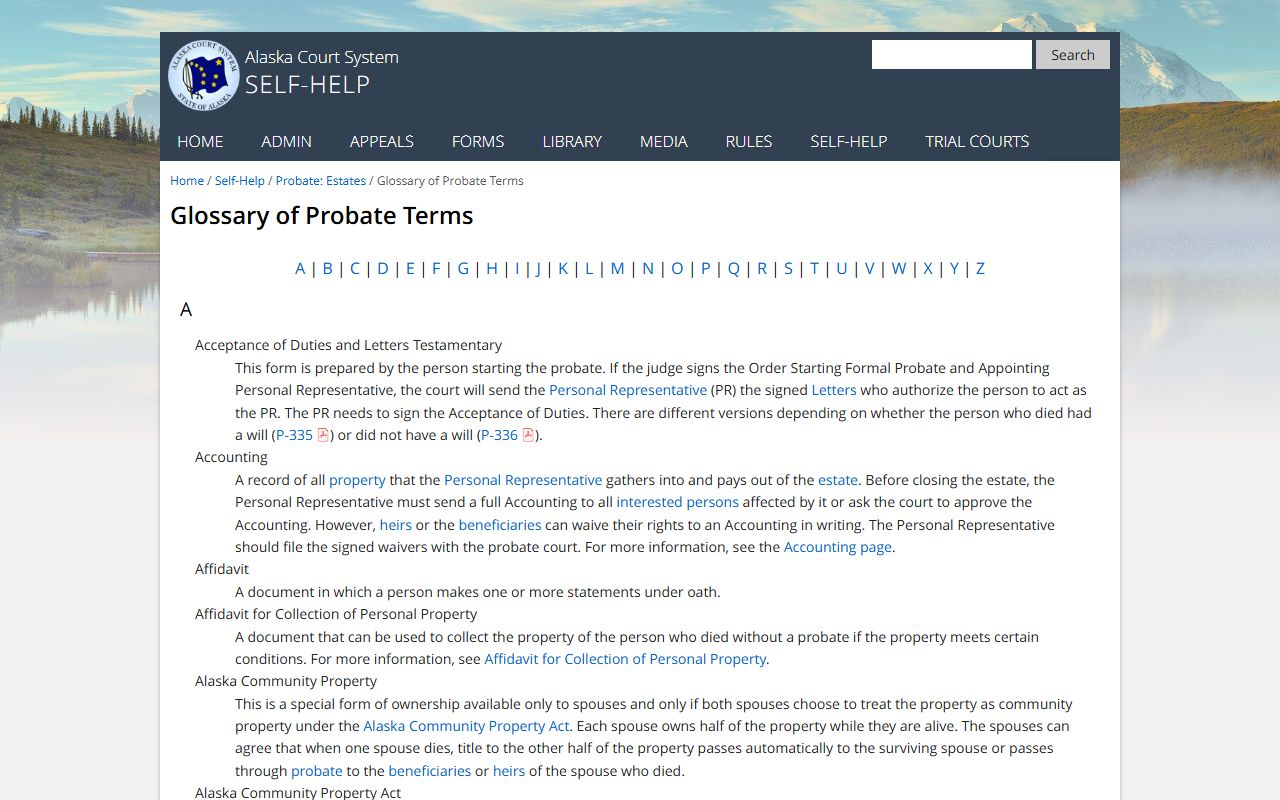
The glossary covers dozens of terms used in Alaska estate proceedings and is particularly useful when reviewing a case file for the first time.
A Personal Representative is the person the court appoints to manage and close the estate. Letters Testamentary authorize a Personal Representative when there is a will. Letters of Administration are issued when no will exists. The Final Accounting is the complete record of all money and property that came into and went out of the estate. Allowances are special payments to surviving family members, up to $55,000 under Alaska law. Ancillary Administration is probate opened in Alaska for someone who lived in another state but owned property here. A Successor is the person legally entitled to receive property from the estate. Receipt and Release documents confirm that beneficiaries received their distributions.
Free self-help guides and all Alaska probate forms are available through Alaska Law Help. For federal court records involving Alaska matters, use PACER, the federal court's electronic records system. The Alaska Legal Services Corporation also offers free legal clinics throughout the state.
Browse Alaska Probate Records by Borough
Alaska probate cases are filed at the Superior Court serving the borough or census area where the deceased lived. Each location has its own clerk, contact information, and filing procedures. Select a borough below to find court details and resources for probate records in that area.
Probate Court Records in Major Alaska Cities
Alaska city residents file probate cases at the Superior Court serving their borough. Select a city below for court details and resources specific to that area.