
Southeast Fairbanks Census Area Probate Records
Probate court records for Southeast Fairbanks Census Area are filed with the Fourth Judicial District. The Fairbanks Superior Court handles estate cases for the communities in this area, including Delta Junction and Tok. If you need to search for a probate case, get copies of estate documents, or open an estate for someone who lived in the census area, this page walks you through the courts, contacts, fees, and procedures involved in Alaska probate.
Southeast Fairbanks Census Area Overview
Where Southeast Fairbanks Probate Records Are Filed
Southeast Fairbanks Census Area is served by the Fourth Judicial District. Probate matters go to the Fairbanks Superior Court at 101 Lacey Street in Fairbanks. Delta Junction is the main community in the census area, located at the terminus of the Alaska Highway. Tok is another significant community further east. Both communities depend on the Fairbanks court for probate filings.
The Fairbanks court has a dedicated probate line. You can reach the probate division at (907) 452-9256. For general customer service, call (907) 452-9277. The court processes new estate filings, issues letters testamentary and letters of administration, and keeps all case records for the Fourth District. In-person visits to the Fairbanks courthouse are possible, but many residents in the census area use mail or the court's online records system instead.
| Fairbanks Superior Court | 101 Lacey Street, Fairbanks, AK 99701 |
|---|---|
| Probate Line | (907) 452-9256 |
| Customer Service | (907) 452-9277 |
| Judicial District | Fourth Judicial District |
| Records Request Form | TF-311 FBKS (available from court) |
| Online Records Request | courts.alaska.gov/trialcourts |
Searching Probate Cases in the Census Area
Alaska's CourtView public access system covers all Alaska trial courts. Use it to search for Southeast Fairbanks probate cases by party name or case number. CourtView shows case status, party names, hearing dates, and docket entries. It is free and available online without an account. If the case was filed in Fairbanks, it will appear in CourtView.
For copies of actual court documents, use the TF-311 FBKS records request form. The Fairbanks Superior Court processes online records requests in four to six weeks. In-person requests at the courthouse are handled the same day in most cases. If you plan to visit in person, call ahead to confirm hours and bring valid identification. The clerk can search by name or case number and pull documents while you wait.
The CourtView information page explains how to use the search system and what information is available. If you can't find a case through CourtView, it may be an older case not yet in the system, or it may be filed under a variation of the name you are using. Try searching by last name only or contact the Fairbanks clerk directly for help.
Note: Online requests through the Fairbanks court system typically take four to six weeks to process. Plan ahead if you need documents for a deadline.
The CourtView information page explains what case data is available online and how to search the Alaska statewide court records system for Southeast Fairbanks probate cases.
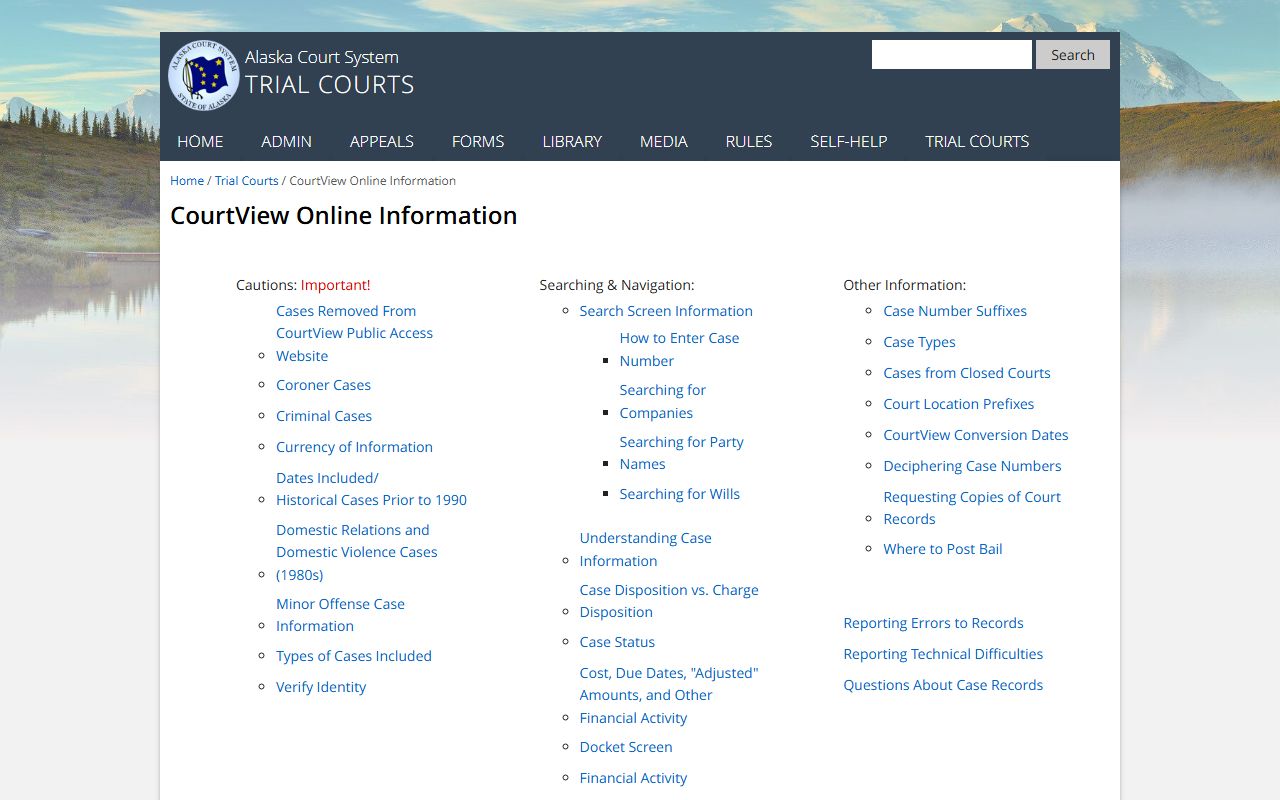
CourtView covers all Alaska trial courts and is the starting point for any probate case search, whether the case was filed recently or several years ago.
Requesting Copies of Probate Records
To get copies of probate records from Southeast Fairbanks cases, use the TF-311 FBKS form from the Fairbanks Superior Court. You can submit the form in person at 101 Lacey Street, Fairbanks, or by mail. Online requests are also accepted through courts.alaska.gov/trialcourts. Provide the estate name, approximate filing year, case number if you have it, and the specific documents you need.
Copy fees are set statewide by the Alaska Court System. Plain copies cost $0.25 per page. Certified copies include a certification fee in addition to the per-page rate. Certified copies of letters testamentary, letters of administration, and court orders are often needed by financial institutions, real estate title companies, and government agencies. Pay by check or money order when submitting a mail request. In-person payments may allow other forms of payment. Always confirm the total cost with the clerk before finalizing your request.
What a Southeast Fairbanks Probate File Contains
A probate case file for a Southeast Fairbanks estate typically includes the original petition, the will if one was filed, an asset inventory, any creditor claims, court orders, and the final decree. The personal representative's accounting is also part of the file once the court approves it. Most of these documents are part of the public record and can be requested by anyone with a legitimate interest in the case.
Probate files in the census area may involve rural property, vehicles, firearms, livestock, and other assets common in interior Alaska. The inventory reflects whatever the deceased owned at the time of death. Claims by creditors, including medical providers and lenders, are part of the file as well. After debts are paid, the remaining assets are distributed according to the will or Alaska's intestacy laws, and that distribution is documented in the final decree.
Genealogists and family researchers sometimes look at probate files to confirm family relationships, find dates, and trace property transfers across generations. Interior Alaska estates from the early and mid-20th century can be particularly interesting for research because they document life in a remote region that was still developing during that period.
The Alaska trial courts records page is where you submit records requests for Southeast Fairbanks Census Area probate cases filed in the Fairbanks Superior Court.
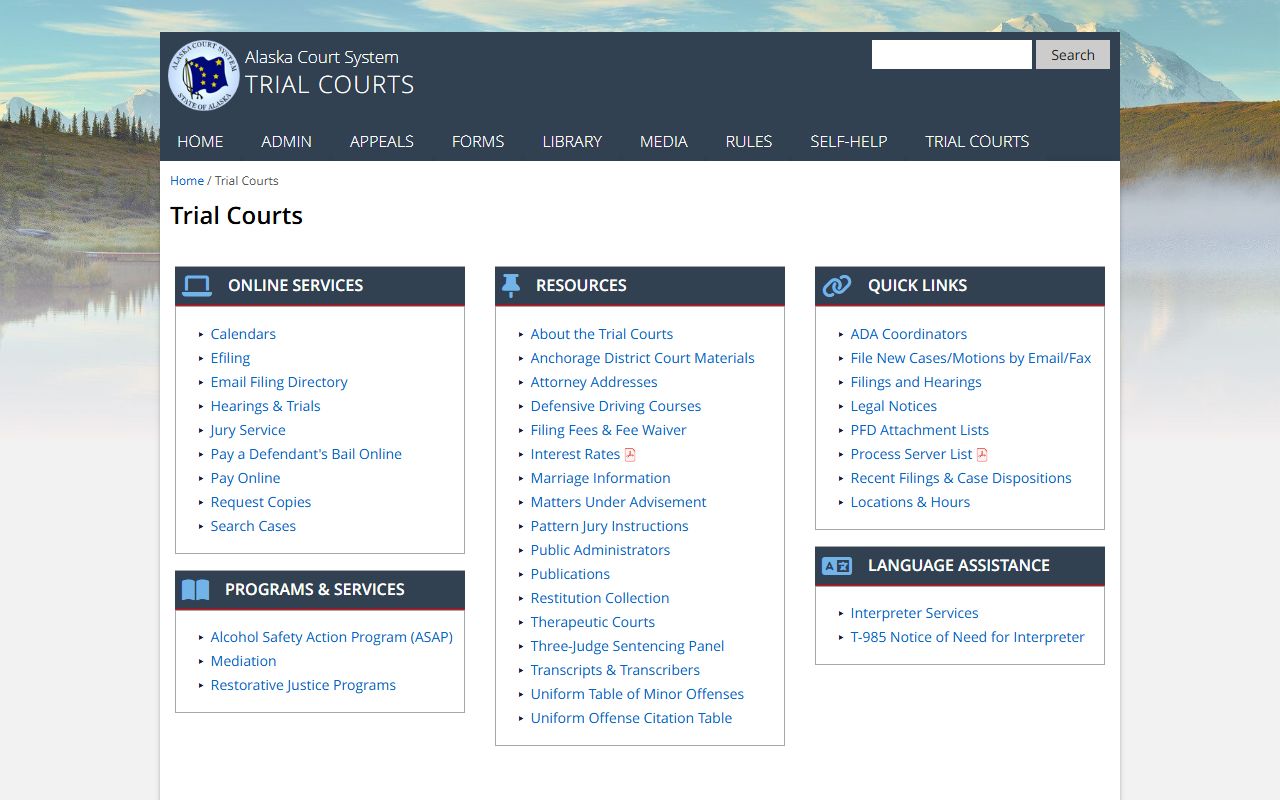
The records page also has information about copy fees, processing times, and how to contact the clerk's office when you need documents from a specific case.
Opening a Probate Case in Southeast Fairbanks
When someone dies in Southeast Fairbanks Census Area, the estate goes through the Fairbanks Superior Court. Alaska offers informal and formal probate. Most estates without disputes use the informal process, which does not require a court hearing to get started. The informal probate process moves faster and costs less in most cases. Formal probate is used when there is a will contest, missing heirs, or an estate too complex for the simpler track.
Under AS 13.16.080, the personal representative takes control of the estate once appointed. That person is responsible for managing assets, giving notice to creditors, paying valid claims, and distributing the remainder to heirs. AS 13.16.145 requires written notice to known creditors and publication in a local newspaper. Creditors have four months from the notice date to file claims. Late claims are generally barred.
Under AS 13.16.620 and AS 13.16.630, the personal representative distributes assets after paying debts and expenses. If the deceased left a will, distribution follows its terms. Without a will, Alaska's intestacy rules apply. The rep files a final accounting with the Fairbanks court under AS 13.16.695. The court reviews and approves the accounting before the estate closes. All standard forms are available at courts.alaska.gov/shc/probate/forms.htm.
Note: Filing a probate case involves fees that vary based on the estate's value. Call the Fairbanks probate line at (907) 452-9256 to confirm current amounts before you file.
Historical Probate Records for Southeast Fairbanks
Historical probate records for Southeast Fairbanks communities are held at the Alaska State Archives. The Fourth Division held records from multiple precincts from 1899 through 1968. The Tok precinct is among those covered. These records predate CourtView and are not available through the online search system. Contact the Archives directly to find out what is available for a specific community or time period.
Early probate records from interior Alaska precincts can include wills, estate inventories, and claims from creditors going back to the gold rush and early settlement periods. They reflect the assets people owned in remote Alaska at a time when much of the region was being developed. Researchers working on family histories or property lineage often find these records essential for filling gaps that no other source can provide.
Legal Help for Southeast Fairbanks Residents
The Alaska Court System's probate self-help center offers guides, forms, and explanations of the process in plain language. Visit Alaska Law Help for step-by-step information on opening and closing an estate in Alaska. The site covers both informal and formal probate and explains what to do if problems come up along the way.
All court forms are free at courts.alaska.gov/shc/probate/forms.htm. The probate laws page lists and explains the key Alaska statutes. If the estate involves disputes, significant assets, or legal questions about the will, consulting an Alaska attorney is the right move before you file anything in the Fairbanks Superior Court.
Communities in Southeast Fairbanks Census Area
Delta Junction is the main community in the census area. Tok is another significant community. All probate cases from the census area are filed with the Fairbanks Superior Court in the Fourth Judicial District.
Nearby Boroughs and Census Areas
These neighboring areas are also served by Fourth Judicial District courts. Each has its own records page on this site.